
Stay Updated with WXING's News and Innovations.
A thread rolling machine is used to form external threads through metal plastic deformation. It is widely used in the production of bolts, studs, and screws. Instead of removing material through cutting, the machine applies pressure to a metal blank using thread rolling dies, causing the material to flow and form the thread profile. This process offers several advantages, including high material utilization, good thread surface quality, and suitability for mass production.
A thread rolling machine forms threads through the relative movement and pressure between the dies and the metal blank. The process generally involves five stages:
A metal blank is prepared according to the required thread specifications. Its diameter, length, and surface condition must be checked before processing. Proper positioning ensures stable contact with the dies. The blank diameter is particularly important because it affects material flow and the final thread dimensions.
The workpiece enters the rolling area, where the dies apply radial pressure while the workpiece rotates or rolls between them. The die position, spacing, and movement determine how pressure is applied to the blank.
When the applied pressure exceeds the material's yield strength, the surface begins to deform plastically. The die profiles press into the blank, forcing the metal to flow toward the thread crests and flanks.
As the dies continue moving, the thread crests, roots, and flanks gradually take shape. The die profile and pitch determine the thread geometry, while rolling pressure, die spacing, and stroke affect material filling and dimensional accuracy.
Once rolling is complete, the pressure is released, and the workpiece is removed. Key inspection items include thread diameter, profile, and surface condition. Thread ring gauges can also be used for go/no-go inspection.
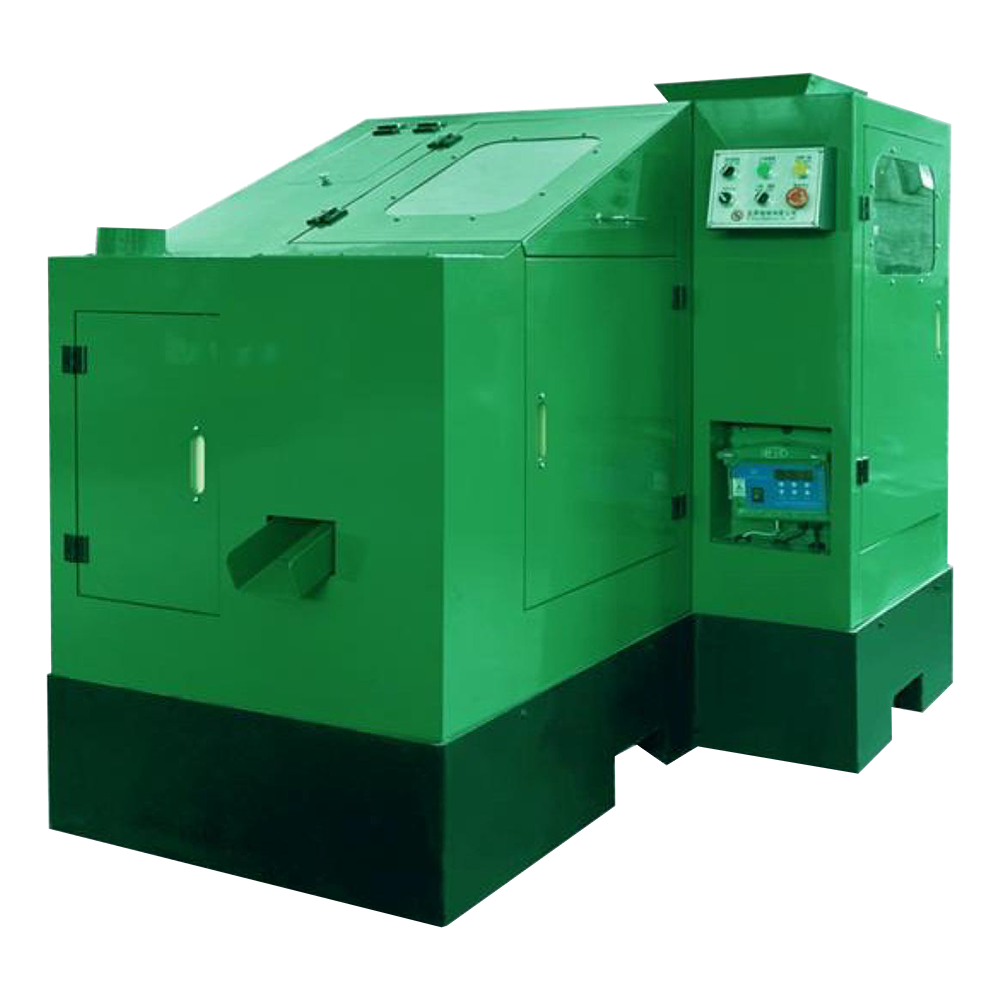
Thread rolling machines are available in several configurations. The main types differ in die structure and workpiece movement.
These machines use two flat dies, one stationary and the other reciprocating. The workpiece rolls between the dies as the thread profile is formed. They are commonly used for high-volume production of bolts and screws.
These machines use two or three cylindrical dies that rotate and apply radial pressure to the workpiece. They can process different sizes of shafts and fasteners, depending on the machine and die configuration.
Planetary machines use a central die and surrounding rolling dies to create relative motion and continuous pressure. They are suitable for specific applications requiring high production efficiency and continuous processing.
Thread rolling offers several practical benefits compared with conventional thread-cutting methods.
Thread quality depends on the machine, dies, material, and processing parameters. These factors must be properly controlled to achieve consistent results.
The die profile, pitch accuracy, and wear condition directly affect thread geometry. Improper die alignment or insufficient machine rigidity can cause uneven loading, thread misalignment, and dimensional variation.
Material strength, hardness, and ductility influence how the blank deforms. Blank diameter, die spacing, rolling pressure, stroke, and lubrication also affect material flow and thread profile formation. These parameters should be adjusted according to the material and thread specifications.