
Stay Updated with WXING's News and Innovations.
One of the most common questions from buyers and engineers is: how fast can a cold heading machine actually work?
The answer is not a single number. Cold heading machine speed depends on machine size, material type, part geometry, station configuration, and tooling conditions. In this guide, we will break down the real production speed of cold heading machines and explain how to optimize performance without compromising quality.
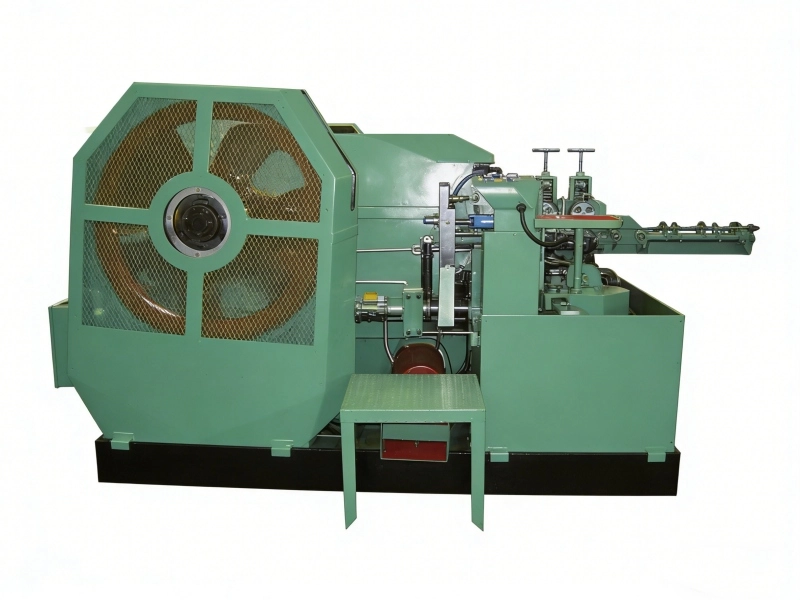
Cold heading machine speed is typically measured in SPM (Strokes Per Minute).
Depending on machine type and application, typical speed ranges are:
• Small bolt makers (M3–M6): 150–400 SPM
• Medium-size machines (M8–M12): 80–180 SPM
• Large heading machines (M16+): 30–90 SPM
• High-speed micro fastener machines: Up to 600 SPM in specialized cases
However, rated speed and actual running speed are not always identical. Many manufacturers operate machines at 70–85% of maximum rated SPM to maintain stability, reduce vibration, and extend tool life.
It is critical to distinguish between:
• Maximum mechanical speed
• Sustainable production speed
• Effective production speed (considering downtime)
True productivity is determined by the last one.
SPM (Strokes Per Minute) refers to how many complete ram cycles occur in one minute. One stroke generally equals one finished part in a single-die system. In multi-station cold heading machines, each stroke advances the part to the next station.
To calculate theoretical hourly output:
Output per hour=SPM×60
For example:
• 120 SPM × 60 = 7,200 parts/hour
But real-world production includes:
• Setup adjustments
• Wire feeding variations
• Lubrication cycles
• Tool changes
• Quality inspections
Therefore, practical efficiency is usually calculated as:
\text{Net Output} = \text{SPM} \times 60 \times \text{Efficiency Rate (75–90%)}
Professional buyers evaluate not only peak SPM, but stable SPM under continuous operation.
Material properties significantly influence cold heading speed. Formability, tensile strength, and work hardening rate all affect the safe operating SPM.
• Excellent cold formability
• Can run at higher SPM
• Lower tool wear
• Common in standard bolts and screws
• Higher deformation resistance
• Generates more heat
• Requires lower SPM
• Higher tool stress
• Significant forming force required
• Reduced speed recommended
• Increased die wear risk
• Soft and ductile
• Can operate at high speeds
• Risk of sticking if lubrication is inadequate
Higher strength materials require:
• Reduced stroke speed
• Improved lubrication
• Optimized die geometry
• Increased tonnage
Ignoring material limits can lead to premature punch breakage and die cracking.
Machine configuration plays a major role in effective production speed.
• Simpler structure
• Lower maximum SPM
• One forming operation per stroke
• Suitable for simple parts
• 2-die 3-blow, 3-die 4-blow, or 4-die 5-blow configurations
• Higher complexity
• Greater forming flexibility
• Often optimized for mass production
Although single-die machines may achieve high stroke rates for simple products, multi-station machines increase total productivity because:
• Multiple forming steps occur in one cycle
• Secondary operations are integrated
• Handling time between processes is eliminated
For complex fasteners, a multi-station cold heading machine dramatically increases throughput despite moderate SPM.
Speed must always be evaluated alongside:
• Part complexity
• Forming stages required
• Scrap rate
Running a cold heading machine at maximum speed does not guarantee maximum profit. Excessive speed may result in:
• Tool fracture
• Dimensional instability
• Surface cracking
• Increased rejection rate
To increase speed safely, focus on the following optimization strategies:
Proper phosphate coating and wire lubrication reduce friction and forming resistance, enabling higher SPM without excessive heat.
Precision die alignment, correct clearance, and stress-relieved die inserts allow stable high-speed operation.
Modern servo-controlled or precision cam-driven transfer systems improve synchronization at high speeds.
Underpowered machines operating at high SPM experience vibration and instability. Adequate tonnage ensures smooth forming.
High-speed production demands predictive maintenance. Replacing punches before failure prevents catastrophic downtime.
Consistent wire diameter tolerance reduces feeding fluctuations and allows stable high-speed operation.
Speed optimization should always be approached systematically, not by simply increasing the motor RPM.
Cold heading machine speed ranges from 30 to 400+ SPM, depending on machine size and application.
1. SPM is only one indicator; sustainable production speed is more important.
2. Material type significantly affects allowable speed.
3. Multi-station machines increase overall productivity even if stroke rate is moderate.
4. Increasing speed requires engineering optimization, not mechanical forcing.
In high-volume fastener manufacturing, the fastest machine is not the most profitable one. The optimal machine is the one that balances speed, precision, tool life, and stability.