
Stay Updated with WXING's News and Innovations.
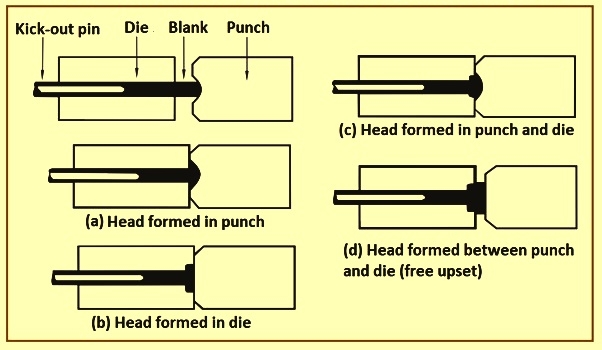
Cold heading has earned its reputation as the go-to process for high-volume part manufacturing. Unlike machining, which removes material from a larger blank, cold heading shapes metal through high-pressure deformation, maintaining material strength while dramatically reducing production time.
From my years of experience, the real advantage lies in efficiency and repeatability. For manufacturers producing thousands or even millions of fasteners, pins, or connectors, cold heading minimizes cycle time and scrap. Another bonus is material utilization: because no chips are cut away, you save on raw material costs, making the process both fast and economical.
However, cold heading isn’t a universal solution. It works best for relatively simple shapes or geometries and requires upfront investment in tooling. But when production volume is high, and design geometry is compatible, it can outperform machining by orders of magnitude.
Machining remains indispensable for parts that demand tight tolerances, complex features, or intricate geometries. Turning, milling, and drilling allow manufacturers to achieve designs that cold heading cannot.
In practice, I often see machining preferred for low-to-medium volume production or parts where custom features and critical surfaces matter more than cycle time. Machined parts also excel when secondary operations like threading, fine hole finishing, or surface treatments are necessary.
The trade-off is speed and material waste. Machining can be slower and generates chips, but it offers unmatched flexibility. If a part’s design is likely to change or requires exacting precision, machining is often the safer choice.
Deciding between cold heading and machining comes down to balancing speed, volume, and accuracy.
High-volume, simple geometries → cold heading usually wins.
Complex parts, tight tolerances → machining is preferable.
Hybrid scenarios → sometimes a combination works: cold heading for the rough form followed by light machining for precision features.
From my consulting experience, a simple framework helps manufacturers: analyze part geometry, expected production volume, and tolerance requirements before committing. This approach prevents costly rework or overinvestment in unsuitable machinery.
Many manufacturers underestimate the total cost of ownership when choosing a process. Cold heading may require expensive tooling and die maintenance, while machining incurs higher labor and cycle-time costs, as well as material waste.
Additional factors include energy consumption, machine downtime, and post-processing needs like heat treatment or surface finishing. A clear understanding of these hidden costs ensures that what seems cheaper upfront doesn’t become more expensive over time.
Evaluating both operational and long-term costs is crucial for making an informed decision. Often, manufacturers that consider these hidden factors achieve better ROI and smoother production scaling.
If you prefer high-volume, straightforward parts and maximizing speed, choose cold heading machines. However, machining remains the tool of choice for complex, precision-demanding components.
Ultimately, the right process depends on your part design, production volume, tolerance requirements, and cost considerations. By analyzing these factors carefully, manufacturers can select the method that aligns with both current production needs and future growth.
In my experience, combining practical knowledge of each process with a clear understanding of production goals leads to smarter investments, fewer production headaches, and higher quality parts for the long term.