
Stay Updated with WXING's News and Innovations.
The machine model and rated speed determine the upper limit of production capacity. Standard cold heading machines can produce over 100 parts per minute, while high-speed multi-station models can reach several hundred parts per minute.
Wear of the main shaft, gears, and crankshaft can increase vibration and cause die breakage or machine jams. Unstable feeding and poor machine balance can also lead to downtime or speed limitations, directly affecting production cycles and output.
Carbon steel wire with good ductility has lower forming resistance and is suitable for high-speed continuous production. Materials with high hardness or poor ductility may crack, cause feeding problems, or damage dies at high speeds, requiring a lower production rate.
Rust, oxidation, uneven wire diameter, and bending can also cause feeding interruptions and uneven loading, reducing overall output.
Fastener geometry and dimensions directly affect cold heading speed. Simple products with fewer forming operations can usually be produced at higher speeds, while complex parts require more forming stages.
Larger-diameter fasteners generally require greater forming forces and tighter deformation control, which can limit production speed.
Process parameters must balance productivity and product quality. Excessive speed may cause uneven material flow, flash, or cracks, while low speed reduces efficiency. Insufficient pressure may cause incomplete forming, whereas excessive pressure can accelerate die wear.
Therefore, forming parameters should be adjusted according to the product and material.
A multi-station cold heading machine can continuously perform cutting, pre-upsetting, final upsetting, punching, and other operations, reducing repeated handling and improving productivity. Properly assigning the deformation across multiple stations also makes forming more stable.
Automatic feeding, online inspection, and quick die changes can further reduce manual intervention and downtime, increasing continuous production capacity.
Die quality directly affects forming efficiency and product quality. High-quality dies with good wear resistance and surface finish can reduce forming resistance and support long-term high-speed production.
Worn or misaligned dies, improper clearances, or complex product geometries can increase forming difficulty and die change frequency, limiting production speed.
Proper lubrication reduces friction, heat, and wear between the equipment, dies, and workpiece. Regular maintenance also helps prevent downtime caused by component failures.
Routine maintenance should focus on dies, the lubrication system, feeding components, and critical mechanical parts to keep the machine operating reliably.
Operator experience can affect actual production speed. Skilled operators can quickly identify and correct problems related to dies, feeding, alignment, and product quality.
Stable raw materials, proper lubrication, reliable equipment, and effective production management are also essential for maintaining high and consistent output.
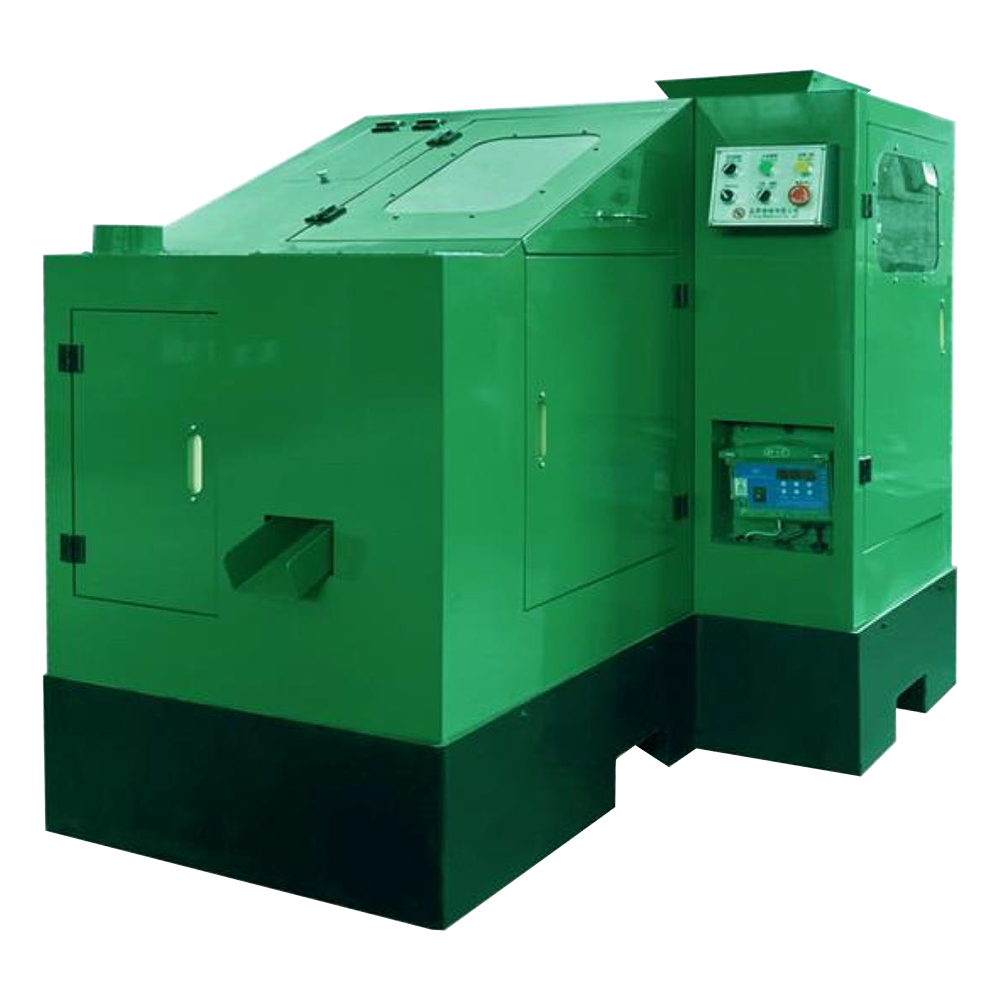
A multi-station cold heading machine can continuously perform cutting, upsetting, extrusion, punching, and other operations, reducing repeated handling and increasing output per unit of time.
Complex fasteners require multiple forming operations. Multi-station equipment distributes the total deformation across different stations, reducing the forming load on each station and improving process stability.
Automatic feeding, part transfer, and quick die changes reduce manual intervention and auxiliary time, improving machine utilization.
For high-volume production of bolts, screws, nuts, and other fasteners, multi-station cold heading machines can maintain a stable production cycle and achieve higher continuous production efficiency.
Select a suitable cold heading machine based on fastener size, design, material, and required output. Complex, high-volume products may benefit from a multi-station model.
Properly distribute deformation across forming stations and maintain die accuracy, clearance, and alignment to reduce forming problems and die change time.
Effective lubrication reduces friction, heat, and wear while improving material flow, supporting stable high-speed production.
Regularly inspect the feeding system, dies, main shaft, gears, crankshaft, and other critical components to reduce failures and unplanned downtime.
Higher speed is not always better. Production speed should be balanced with product quality and machine life to avoid cracks, dimensional deviations, or excessive die wear caused by over-speeding.