
Stay Updated with WXING's News and Innovations.
Cold heading quality depends not only on equipment precision and die design but also on the condition of the wire before forming.
During the cold heading process, a cold heading machine forms metal wire into fastener blanks under pressure. The wire's hardness, surface quality, diameter tolerance, and lubrication all affect metal flow and forming stability. Improper wire preparation can lead to cracking, surface defects, and dimensional inconsistencies.
Cold heading forms metal wire into the required shape through plastic deformation at room temperature. The material must have sufficient ductility to withstand deformation without cracking.
Excessive hardness, surface contamination, inconsistent diameter, or inadequate lubrication can make forming more difficult and affect product quality.
Wire preparation mainly serves three purposes:
▹ Improving ductility: Reducing the effects of work hardening through suitable material treatment.
▹ Improving surface condition: Removing scale, rust, and contaminants before lubrication.
▹ Maintaining consistency: Controlling wire dimensions and surface conditions to reduce production variations.
Wire may become work-hardened during drawing, resulting in increased hardness and reduced ductility. Without suitable preparation, substantial deformation during cold heading may increase the risk of cracking.
Annealing uses controlled heating and cooling to adjust the material's microstructure and mechanical properties. Depending on the material and processing conditions, methods such as spheroidizing or recrystallization annealing may improve formability.
Not all wire requires the same treatment. The appropriate process depends on material grade, previous processing, and required mechanical properties.
Wire surfaces may contain mill scale, rust, oil, or other contaminants. These can interfere with lubrication and contribute to surface indentations or scratches during forming.
Common methods include:
▹ Mechanical descaling: Removing scale and loose contaminants.
▹ Pickling: Using chemical solutions to remove scale and rust, followed by thorough rinsing.
▹ Surface cleaning: Removing residual oil and contaminants before further treatment.
Cleaning must be properly controlled. Insufficient cleaning affects lubrication, while excessive treatment may damage the material surface.
Phosphating is commonly used for steel wire. It creates a phosphate conversion coating that helps lubricants adhere to the surface. Combined with a suitable lubricant, it reduces friction between the wire and dies.
Insufficient lubrication may cause:
▹ Increased friction between the wire and dies.
▹ Higher forming loads and localized temperature increases.
▹ Scratches or scoring on workpiece surfaces.
▹ Accelerated die wear.
Phosphating is not suitable for every metal. Steel wire may use phosphate-based lubrication systems, while aluminum alloys require treatments suited to their surface characteristics. Selection should consider material type, deformation level, and lubricant requirements.
Wire diameter and cut-off length together determine the material volume of each blank. Variations in either dimension can affect head filling and final product dimensions.
Before cold heading, check:
▹ Whether the wire diameter meets specified tolerances.
▹ Whether the diameter is consistent along the wire.
▹ Whether noticeable bending or local deformation exists.
▹ Whether the surface has damage that could affect forming.
Consistent dimensions help maintain uniform blank volume and stable forming conditions.
Improper storage and transportation can expose prepared wire to moisture, contamination, and mechanical damage. Rust may affect subsequent lubrication, while impact or compression can cause local deformation.
Wire should be stored in a dry, clean environment, away from damp floors. Different material grades and production batches should also be clearly identified to prevent mix-ups and cross-contamination.
| Preparation Issue | Effect on Cold Heading | Possible Result |
|---|---|---|
| Excessive material hardness | Reduced formability | Cracking and forming difficulties |
| Inadequate scale removal | Poor surface and lubrication conditions | Indentations and scratches |
| Insufficient lubrication | Increased friction and forming loads | Workpiece scoring and die wear |
| Inconsistent wire diameter | Variations in blank volume | Dimensional deviations |
| Moist storage conditions | Rust or contamination | Reduced surface quality |
These problems may also result from material composition, die design, machine settings, or deformation levels. Production defects should therefore be evaluated in relation to the actual processing conditions.
Several checks should be completed before cold heading:
▹ Verify material specifications: Confirm that the material grade, dimensions, and mechanical properties meet requirements.
▹ Check mechanical properties: Test hardness, tensile strength, and relevant ductility indicators.
▹ Inspect surface condition: Check for scale, rust, cracks, and mechanical damage.
▹ Measure wire dimensions: Verify diameter and cut-off length to maintain consistent blank volume.
▹ Check lubrication: Ensure that the surface treatment and lubricant are suitable for the material and forming process.
Fasteners with large heads, complex geometries, or substantial deformation requirements need closer control of wire preparation. Different metals also require different treatment methods based on their properties and forming conditions.
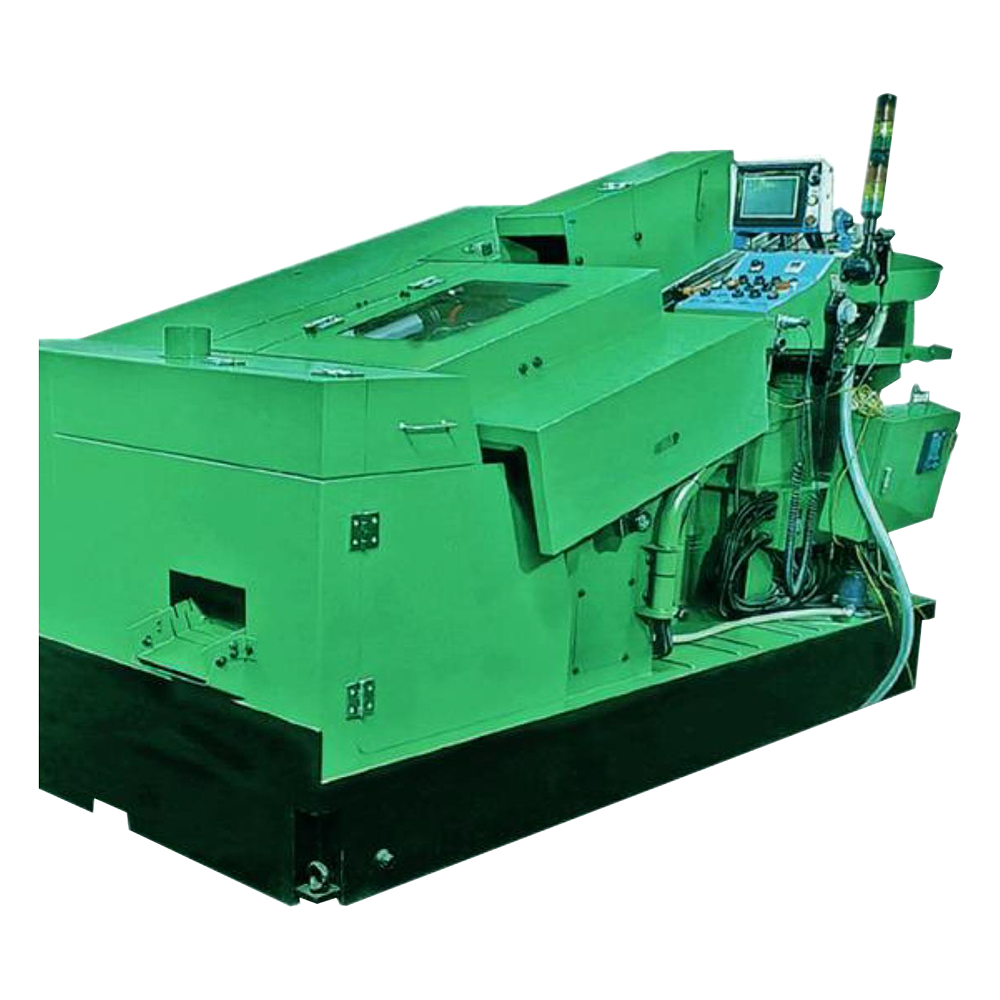
Wire preparation is an important part of cold heading production. Annealing, surface cleaning, phosphating, lubrication, dimensional inspection, and proper storage all contribute to stable forming conditions. Controlling these processes helps reduce defects and improve fastener production consistency.