
Stay Updated with WXING's News and Innovations.

From the screws inside household appliances to the fasteners holding automotive systems together, cold heading quietly supports modern life. Because these components are small, standardized, and mass-produced, they tend to be overlooked. Yet their reliability, strength, and consistency are critical. Understanding where cold heading products appear in everyday life helps manufacturers recognize why this process remains a cornerstone of high-volume fastener and metal part production.
Home appliances are a textbook example of where cold heading delivers value at scale. Products such as washing machines, refrigerators, air conditioners, ovens, and dishwashers all rely on dozens—sometimes hundreds—of cold-headed components.
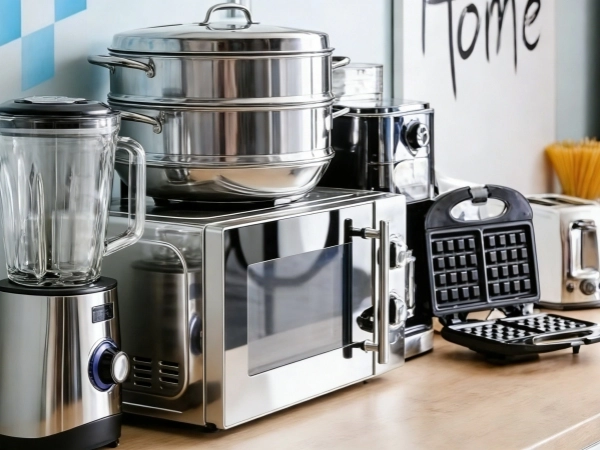
Typical cold heading products used in home appliances include:
• Screws and bolts for structural assembly
• Shafts and pins for rotating or moving parts
• Rivets and fasteners for internal frameworks
Cold heading is especially suitable for this sector because appliance manufacturers demand high consistency across large production volumes. Cold-headed parts offer tight dimensional tolerances and repeatable mechanical properties, ensuring smooth assembly on automated production lines.
In addition, cold heading improves material utilization compared with machining. Less material waste translates directly into lower unit costs—an essential factor in highly competitive appliance markets where margins are often tight.
The automotive industry is one of the largest consumers of cold-headed fasteners worldwide. Vehicles depend on thousands of metal components, many of which are produced using cold heading due to its strength and reliability advantages.
Common automotive cold heading applications include:
• Engine bolts and studs
• Chassis and suspension fasteners
• Transmission pins and shafts
• Safety-critical nuts and threaded components
Cold heading enhances mechanical strength through cold work hardening, making it ideal for parts exposed to vibration, fatigue, and dynamic loads. This is particularly important in automotive applications, where component failure can have serious safety implications.
For automotive manufacturers and Tier 1 suppliers, cold heading also supports production efficiency and quality control. Once tooling is established, the process delivers uniform parts at high speed, helping meet strict industry standards while keeping costs predictable.
Furniture and household products may appear simple on the surface, but their durability depends heavily on the quality of small metal components. Cold heading plays a key role in producing these parts efficiently and consistently.

Typical applications include:
• Screws and bolts used in flat-pack furniture
• Dowels and pins for structural reinforcement
• Fasteners for cabinets, shelving systems, and fixtures
Cold-headed fasteners offer smooth surfaces and uniform shapes, which improve both functionality and appearance—important factors in consumer-facing products. Moreover, their consistent strength ensures that furniture remains stable over long-term use, even with repeated assembly and disassembly.
For manufacturers, cold heading enables large-scale production with minimal variation, making it easier to supply global markets with standardized products while controlling manufacturing costs.
Cold heading may operate quietly behind the scenes, but it supports nearly every aspect of modern life. From home appliances and automobiles to furniture and household products, cold-headed components provide the strength, precision, and cost efficiency that mass production demands.
For manufacturers, recognizing the real-world applications of cold heading is not just about understanding a process—it is about making better production decisions. Knowing where and how cold-headed parts are used allows engineers and buyers to choose the right forming method, optimize material usage, and design products that balance performance with scalability. Feel free to contact WXING!