
Stay Updated with WXING's News and Innovations.
With the development of automotive manufacturing, mechanical equipment, construction, and industrial production, the demand for fasteners continues to grow.
For large-scale production of high-quality fasteners, traditional machining methods face increasing limitations in terms of production efficiency, material utilization, and manufacturing costs.
Compared with conventional machining processes, using a Cold Heading Machine for fastener production can improve production speed, reduce material waste, and enhance product performance, making it an important solution for modern fastener manufacturing.
So, what are the main advantages of producing fasteners with a cold heading machine? This article will analyze the benefits from three key aspects: production efficiency, cost control, and product quality.
A Cold Heading Machine is a type of metal forming equipment that uses plastic deformation principles to shape metal wire at room temperature through processes such as extrusion, upsetting, and forming.
Unlike traditional machining methods such as turning and milling, the Cold Heading Process forms products through controlled material flow rather than removing large amounts of metal. This helps reduce material waste and improve production efficiency.
In fastener manufacturing, cold heading machines are commonly used to produce bolts, screws, nuts, and other metal components.
Through automatic feeding systems, multi-station processing, and precision dies, the machine can complete multiple operations, including cutting, pre-forming, and final forming, enabling stable and high-volume production.
◆ Because cold heading makes full use of the material’s plasticity, the Cold Forming Process is especially suitable for standardized and high-volume fastener production.
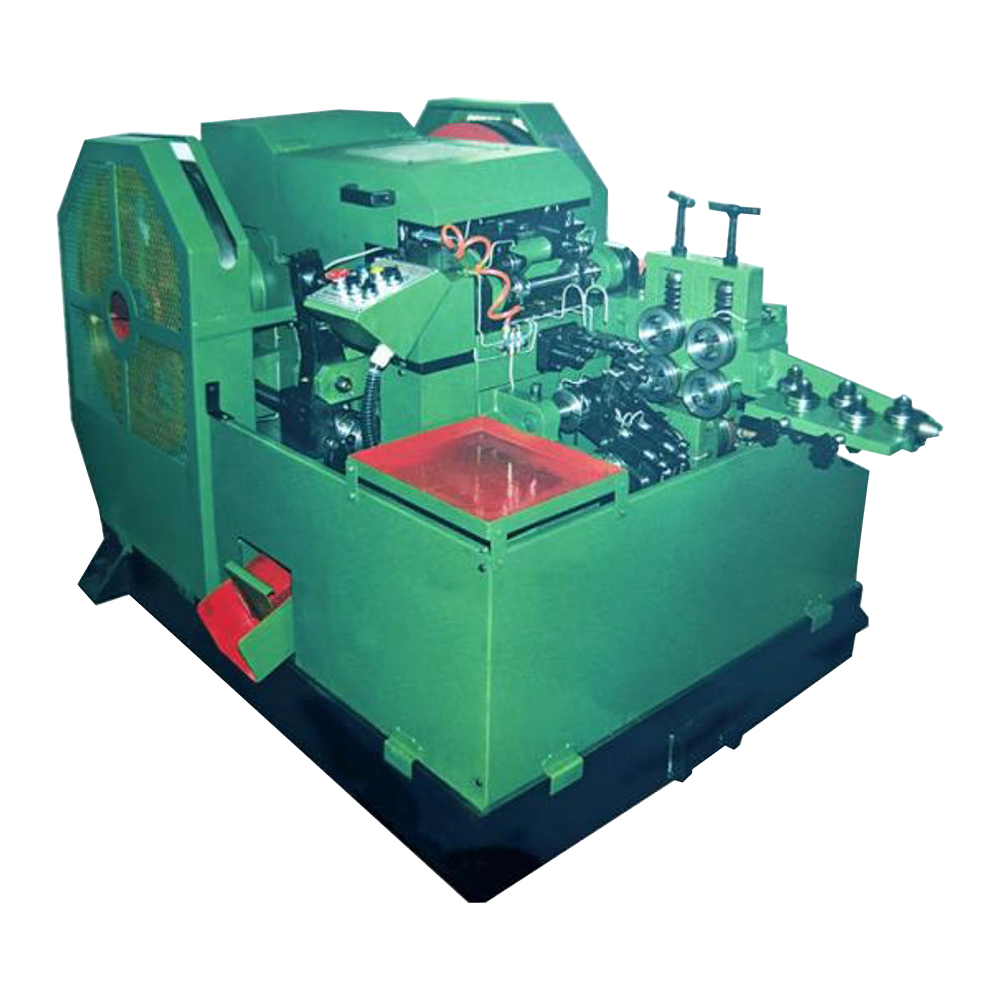
For fastener manufacturers, production efficiency directly affects output capacity and delivery performance.
Traditional machining processes often require multiple steps, such as turning, drilling, and milling. In contrast, cold heading machines can reduce processing procedures through continuous forming, improving overall production speed.
▸ Depending on the machine model, product specifications, and material conditions, high-speed cold heading machines can typically produce dozens or even hundreds of fasteners per minute.
▸ This makes them highly suitable for mass production applications, including automotive components, mechanical equipment, and industrial fasteners.
The cold heading process improves material utilization by forming metal through pressure rather than cutting away excess material.
During traditional machining, a significant amount of metal is removed as chips. Cold heading, however, allows wire material to flow into the required shape, making better use of raw materials.
▸ For high-volume fastener production, even small material savings per part can result in significant cost reductions over long production cycles.
Modern cold heading machines are usually equipped with automatic feeding systems and continuous forming capabilities, reducing manual handling and repetitive operations.
This automated production method improves manufacturing efficiency and reduces dependence on labor.
▸ For companies producing large quantities of fasteners, automation can significantly lower the manufacturing cost per unit and improve overall production economics.
During the Cold Heading Process, metal undergoes plastic deformation rather than being removed by cutting. This allows the internal material structure to be maintained more effectively.
The work hardening effect generated during cold heading can improve the strength and fatigue resistance of metal materials.
Compared with cutting processes, cold heading helps preserve the material grain flow, allowing fasteners to achieve better load-bearing capability and reliability.
▸ Therefore, cold heading technology is widely used for manufacturing high-performance fasteners that require excellent mechanical properties.
Cold heading machines use precision dies to control the forming process, reducing dimensional variations and improving consistency among large batches of fasteners.
Accurate dimensions and stable product quality help ensure smoother assembly and reliable performance in final applications.
▸ In addition, cold forming can provide better surface quality, making cold-headed fasteners suitable for precision assembly requirements.
As manufacturing industries continue to demand higher efficiency, lower costs, and better product performance, cold heading technology offers clear advantages compared with traditional machining methods.
| Comparison Item | Cold Heading Process | Traditional Machining |
| Material Utilization | High material efficiency with less waste | More material removed as machining chips |
| Production Speed | Continuous automated production suitable for high-volume manufacturing | Slower due to multiple machining steps |
| Manufacturing Process | Integrated forming process with fewer secondary operations | Requires several machining procedures |
| Product Performance | Maintains material grain flow and improves strength through work hardening | Cutting may affect material structure |
| Dimensional Consistency | High consistency through precision dies | More affected by machining parameters |
◆ For manufacturers requiring large quantities of standard fasteners, cold heading machines provide a better balance between efficiency, cost, and product quality.
Overall, using a Cold Heading Machine for fastener production offers significant advantages, including higher production efficiency, reduced material waste, lower manufacturing costs, and improved product strength and consistency.
Compared with traditional machining methods, the Cold Heading Process is better suited to standardized, high-volume fastener manufacturing.
▶ As industries such as automotive, machinery, and industrial manufacturing continue to demand higher-performance fasteners, cold heading machines will play an increasingly important role in improving production efficiency and enhancing manufacturing competitiveness.